Destination spotlight
Bohol
Bohol, a spectacular island province in the Central Visayas of the Philippines, delivers an enchanting eco-adventure destination, seamlessly blending surreal geological formations and rare wildlife with white-sand beaches.
Destination
Travel experiences in Bohol
Popular packages
Showing 1 packages Resident(outbound)
5 Days 4 Nights Philippines Group Departure Package
Experience the best of the Philippines’ Visayas region on this 5-day adventure spanning Cebu,…
from
$2,425All packages loaded for this destination.
Guide
About Bohol
Sited gracefully within the heart of the Central Visayas region of the Philippines, the island province of Bohol stands as an unparalleled haven for sustainable eco-tourism, rich colonial heritage, and marine biodiversity. Encompassing a massive, oval-shaped main island surrounded by over seventy smaller offshore islets, this vibrant province covers an estimated total land area of roughly 4,800 square kilometers. Historically recognized as the site of the famous 1565 Sandugo (Blood Compact) treaty between Spanish explorer Miguel López de Legazpi and Datu Sikatuna, Bohol forms a distinct cultural and geographic enclave. It functions globally as a model destination where bizarre geological landscapes, rare endemic wildlife, and pristine coastal ecosystems are protected under strict environmental mandates.
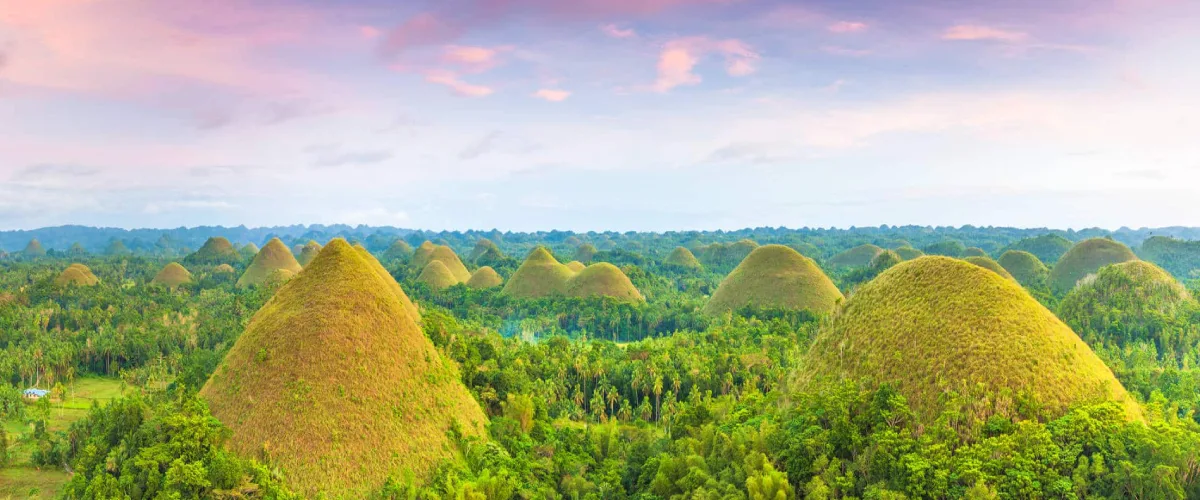
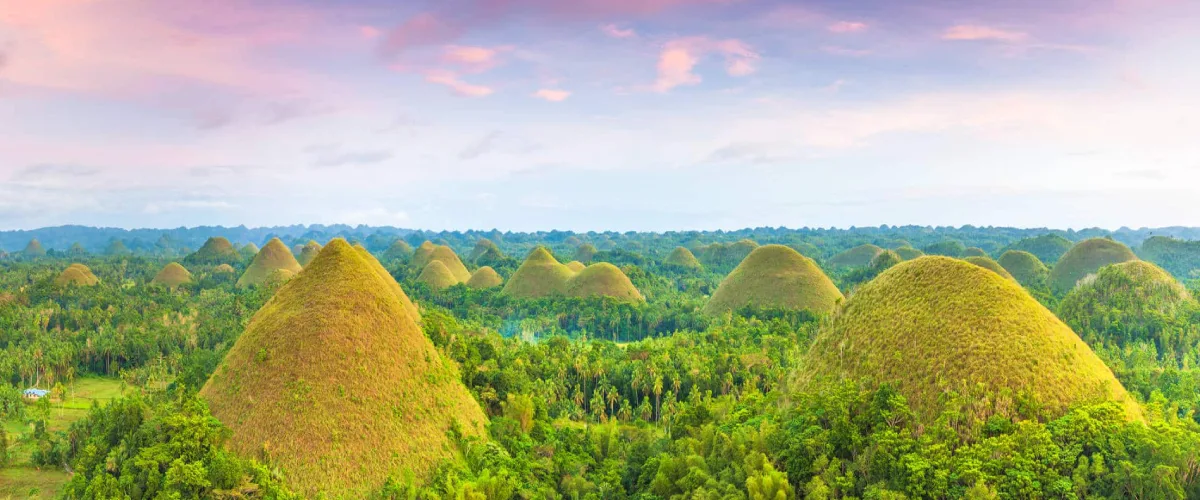
The physical geography of Bohol is beautifully defined by its unique interior limestone plateaus and dramatic subterranean karst networks. The absolute crown jewel of this terrain is the world-renowned Chocolate Hills, a spectacular geological formation consisting of at least 1,260 perfectly symmetrical, cone-shaped hills spread across an area of more than fifty square kilometers. Composed of weathered marine limestone dating back thousands of years, these unique mounds are covered in lush green grass that dries up and turns a rich, uniform chocolate-brown during the peak of the dry season, creating a surreal landscape. This majestic geological monument is fiercely protected as a National Geological Monument under the management frameworks of the Department of Environment and Natural Resources.
Beyond its rolling architectural hills, Bohol is celebrated internationally as the primary sanctuary for the highly endangered Philippine Tarsier (Carlito syrichta). Measuring merely between 85 to 160 millimeters in height, this solitary, nocturnal creature ranks as one of the world's smallest known primates, famous for its massive, fixed eyes and incredible ability to leap up to three meters between tree trunks. Because tarsiers are highly sensitive to noise and prone to extreme stress in captivity, their welfare is managed carefully under the strict, non-invasive observation guidelines of the Philippine Tarsier Foundation. Visitors can walk quietly through protected, open-canopy forest sanctuaries in Corella, learning about the fragile habitat of these unique mammals from certified local conservationists.
Turning toward the aquatic corridors, Bohol transitions seamlessly into a world-class marine paradise, anchored firmly by Panglao Island, which is connected to the southern tip of the mainland via two short bridge causeways. The waters enveloping Panglao and the nearby Balicasag Island host an exceptional marine environment featuring dramatic wall drop-offs, vibrant coral meadows, and massive schools of pelagic fish. These waters are closely monitored under municipal marine sanctuary laws to restrict illegal commercial fishing and anchor damage. On the mainland, the interior is cut by the majestic Loboc River, a clean, emerald-green freshwater waterway that serves as a focal point for sustainable riverboat cruises and night-time kayaking tours to observe synchronous firefly displays among the mangroves.
Logistically, navigating Bohol is highly efficient, centered around the modern Bohol-Panglao International Airport, famously celebrated as the first fully green, eco-airport in the Philippines due to its advanced solar power generation and sustainable waste systems. International and domestic travelers can also arrive via a comfortable two-hour fast ferry ride from the neighboring transit hub of Cebu City into the Tagbilaran City seaport. Accommodation options across the province cater beautifully to every demographic, ranging from rustic, eco-conscious river resorts nestled deep within the nipa palm forests of Loboc to ultra-luxury, high-end beachfront boutique resorts along the famous Alona and Dumaluan white-sand beaches of Panglao.
Sustainable travel and ancestral heritage preservation remain critical pillars of Bohol’s modern development blueprint, driven by the Tourism Promotions Board. The province enforces strict structural preservation codes to rebuild and safeguard its historic Spanish-era coral stone churches, such as the Baclayon Church, which was heavily restored following a major earthquake. Visitors are highly encouraged to eliminate single-use plastics, utilize certified reef-safe sunscreens, and support local community craft cooperatives that weave traditional asin tibuok (rare artisanal sea salt) and native baskets. This careful safeguarding of geographic wonders ensures Bohol remains a pristine, bucket-list sanctuary for future generations of global travelers.
Map
Bohol map
9.850000, 124.200000
Destination FAQs
Do you need to book a domestic flight from Manila to reach Bohol?
Flying is the fastest option, as you can take a direct 1.5-hour domestic flight from Manila to the Bohol-Panglao International Airport. Alternatively, if you are already exploring the neighboring island of Cebu, you can take a highly convenient 2-hour high-speed ferry ride (such as OceanJet) from Cebu Pier 1 directly into Tagbilaran Pier in Bohol.
When is the best month to visit Bohol to see the Chocolate Hills in brown?
To see the Chocolate Hills in their iconic, velvety-brown state, you should plan your visit during the dry season, running from late February to May. During these summer months, rainfall is minimal, causing the grass to dry out. Throughout the rainy season (June to January), the hills turn a vibrant emerald-green.
Are visitors allowed to touch or hold the tarsiers at the sanctuaries?
Absolutely not. Philippine tarsiers are highly sensitive, nocturnal animals that are easily traumatized by human touch, camera flashes, and loud noises, which can tragically lead them to commit self-harm. Visitors must maintain a respectful silence, keep a safety distance of at least two meters, and turn off all camera flash settings.
Is Alona Beach in Panglao suitable for swimming and snorkeling?
Yes, Alona Beach is a stunning 1.5-kilometer stretch of powdery white sand perfect for swimming. However, because it serves as the primary jump-off point for outrigger dive boats, the immediate shoreline has boat traffic and sea-grass. For pristine, uninterrupted swimming, walking further east to Dumaluan Beach is highly recommended.
Why book Bohol with us?
- Tailored itineraries: We design every itinerary with local insight and flexible travel dates.
- Trusted local teams: Our guides, transfers, and accommodation partners are selected for comfort and reliability.
- Simple planning: Get itinerary support, transport, and booking assistance from one dedicated team.